Back to Notes
Don’t Punish the Learner: The Quiet Design Rules Behind Content That Students Actually Finish
Don’t Punish the Learner: The Quiet Design Rules Behind Content That Students Actually Finish
Don’t Punish the Learner: The Quiet Design Rules Behind Content That Students Actually Finish

Here’s something most of us who build learning products don’t say out loud: a big part of our job is training people. Not in a strict, controlling way—but in the sense that every small choice we make quietly teaches a learner a habit. We just don’t usually call it that.
Here’s something most of us who build learning products don’t say out loud: a big part of our job is training people. Not in a strict, controlling way—but in the sense that every small choice we make quietly teaches a learner a habit. We just don’t usually call it that.
Here’s something most of us who build learning products don’t say out loud: a big part of our job is training people. Not in a strict, controlling way—but in the sense that every small choice we make quietly teaches a learner a habit. We just don’t usually call it that.
Every screen a learner opens teaches two things at once. The topic on the page, and a quieter message underneath: is learning here worth the effort? A slow video, a plain “Wrong”, a score that shows up with no hint of what to do next—each of these silently tells the brain that this isn’t worth it. We don’t plan for that to happen, but it does.
Every screen a learner opens teaches two things at once. The topic on the page, and a quieter message underneath: is learning here worth the effort? A slow video, a plain “Wrong”, a score that shows up with no hint of what to do next—each of these silently tells the brain that this isn’t worth it. We don’t plan for that to happen, but it does.
Every screen a learner opens teaches two things at once. The topic on the page, and a quieter message underneath: is learning here worth the effort? A slow video, a plain “Wrong”, a score that shows up with no hint of what to do next—each of these silently tells the brain that this isn’t worth it. We don’t plan for that to happen, but it does.
I lead design for the Content and Learning Outcome pod at NxtWave. Students from many different courses come to one learning portal to watch videos, solve MCQs, practise coding and take exams. Our North Star is simple to say: help learners put in more effort and get more value out of it. Simple to say, and surprisingly hard to achieve.
I lead design for the Content and Learning Outcome pod at NxtWave. Students from many different courses come to one learning portal to watch videos, solve MCQs, practise coding and take exams. Our North Star is simple to say: help learners put in more effort and get more value out of it. Simple to say, and surprisingly hard to achieve.
I lead design for the Content and Learning Outcome pod at NxtWave. Students from many different courses come to one learning portal to watch videos, solve MCQs, practise coding and take exams. Our North Star is simple to say: help learners put in more effort and get more value out of it. Simple to say, and surprisingly hard to achieve.
For the initial days I chased that goal with the usual tools—cleaner screens, clearer words, faster flows. Some of it helped. But the real shift came from an unexpected place: a small book about training dolphins and dogs, and one very difficult teenager.
For the initial days I chased that goal with the usual tools—cleaner screens, clearer words, faster flows. Some of it helped. But the real shift came from an unexpected place: a small book about training dolphins and dogs, and one very difficult teenager.
For the initial days I chased that goal with the usual tools—cleaner screens, clearer words, faster flows. Some of it helped. But the real shift came from an unexpected place: a small book about training dolphins and dogs, and one very difficult teenager.
It slowly changed the way I think about helping anyone learn anything—and almost none of it turned out to be about screens.
It slowly changed the way I think about helping anyone learn anything—and almost none of it turned out to be about screens.
It slowly changed the way I think about helping anyone learn anything—and almost none of it turned out to be about screens.
We Are Always Teaching a Habit
We Are Always Teaching a Habit
We Are Always Teaching a Habit
The main idea in the book is simple, and it has a name: reinforcement. Anything you reward right after a behaviour makes that behaviour more likely to happen again. Anything you ignore, or make to feel bad, slowly fades away—and the person’s wish to try again fades along with it.
The main idea in the book is simple, and it has a name: reinforcement. Anything you reward right after a behaviour makes that behaviour more likely to happen again. Anything you ignore, or make to feel bad, slowly fades away—and the person’s wish to try again fades along with it.
The main idea in the book is simple, and it has a name: reinforcement. Anything you reward right after a behaviour makes that behaviour more likely to happen again. Anything you ignore, or make to feel bad, slowly fades away—and the person’s wish to try again fades along with it.
When the reward is something the learner actually likes—a word of praise, a green tick, a few points, a small sign of progress—we call it positive reinforcement. It is the most powerful and the most underused tool we have.
When the reward is something the learner actually likes—a word of praise, a green tick, a few points, a small sign of progress—we call it positive reinforcement. It is the most powerful and the most underused tool we have.
When the reward is something the learner actually likes—a word of praise, a green tick, a few points, a small sign of progress—we call it positive reinforcement. It is the most powerful and the most underused tool we have.
There’s a lovely story in the book. A busy lawyer loved playing squash, but he shouted at himself after every bad shot. One day he flipped it. He praised his good shots and simply let the bad ones go. Within a few weeks he was playing better—and, for the first time, actually enjoying the game.
There’s a lovely story in the book. A busy lawyer loved playing squash, but he shouted at himself after every bad shot. One day he flipped it. He praised his good shots and simply let the bad ones go. Within a few weeks he was playing better—and, for the first time, actually enjoying the game.
There’s a lovely story in the book. A busy lawyer loved playing squash, but he shouted at himself after every bad shot. One day he flipped it. He praised his good shots and simply let the bad ones go. Within a few weeks he was playing better—and, for the first time, actually enjoying the game.
Nothing changed except what he chose to notice.
Nothing changed except what he chose to notice.
Nothing changed except what he chose to notice.

That’s the whole game. A learner is always doing something right, even if it’s small. Our design decides whether that small right thing gets noticed and rewarded—or whether we only ever point out what went wrong.
That’s the whole game. A learner is always doing something right, even if it’s small. Our design decides whether that small right thing gets noticed and rewarded—or whether we only ever point out what went wrong.
That’s the whole game. A learner is always doing something right, even if it’s small. Our design decides whether that small right thing gets noticed and rewarded—or whether we only ever point out what went wrong.
In learning, whatever you reward is what grows. Reward speed, and you get rushing. Reward real understanding, and you slowly get real understanding.
In learning, whatever you reward is what grows. Reward speed, and you get rushing. Reward real understanding, and you slowly get real understanding.
In learning, whatever you reward is what grows. Reward speed, and you get rushing. Reward real understanding, and you slowly get real understanding.
So I started looking at our portal with one blunt question: on this exact screen, what behaviour are we actually rewarding? Real understanding? Or just clicking “next” on a video that’s quietly playing in another tab?
So I started looking at our portal with one blunt question: on this exact screen, what behaviour are we actually rewarding? Real understanding? Or just clicking “next” on a video that’s quietly playing in another tab?
So I started looking at our portal with one blunt question: on this exact screen, what behaviour are we actually rewarding? Real understanding? Or just clicking “next” on a video that’s quietly playing in another tab?
Often the honest answer was uncomfortable. We were rewarding finishing, not understanding—speed, not effort. A learner could complete everything on the screen and still walk away having learnt almost nothing. Good numbers, empty learning.
Often the honest answer was uncomfortable. We were rewarding finishing, not understanding—speed, not effort. A learner could complete everything on the screen and still walk away having learnt almost nothing. Good numbers, empty learning.
Often the honest answer was uncomfortable. We were rewarding finishing, not understanding—speed, not effort. A learner could complete everything on the screen and still walk away having learnt almost nothing. Good numbers, empty learning.
Once you start seeing a product as something that gently trains people, you can’t unsee it.
Once you start seeing a product as something that gently trains people, you can’t unsee it.
Once you start seeing a product as something that gently trains people, you can’t unsee it.
The Most Expensive Way to Teach
The Most Expensive Way to Teach
The Most Expensive Way to Teach
In a learning portal we never shout at anyone. But we still have quiet ways of making a learner feel bad—harsh negative marking, a plain red “Wrong”, a screen that shows only the low score, and no hint at all about how to do better next time.
In a learning portal we never shout at anyone. But we still have quiet ways of making a learner feel bad—harsh negative marking, a plain red “Wrong”, a screen that shows only the low score, and no hint at all about how to do better next time.
In a learning portal we never shout at anyone. But we still have quiet ways of making a learner feel bad—harsh negative marking, a plain red “Wrong”, a screen that shows only the low score, and no hint at all about how to do better next time.
The book is very clear about this. Making someone feel bad might stop a behaviour for a moment, but it teaches them nothing about what to do instead. It only adds fear—and fear makes people avoid the whole subject, not just the mistake.
The book is very clear about this. Making someone feel bad might stop a behaviour for a moment, but it teaches them nothing about what to do instead. It only adds fear—and fear makes people avoid the whole subject, not just the mistake.
The book is very clear about this. Making someone feel bad might stop a behaviour for a moment, but it teaches them nothing about what to do instead. It only adds fear—and fear makes people avoid the whole subject, not just the mistake.
There’s a father in the book who took away his son’s favourite bike because his marks had dropped. The boy studied harder and improved a little—but the father said it still wasn’t enough and kept the bike locked away. So the boy gave up completely and stopped studying at all.
There’s a father in the book who took away his son’s favourite bike because his marks had dropped. The boy studied harder and improved a little—but the father said it still wasn’t enough and kept the bike locked away. So the boy gave up completely and stopped studying at all.
There’s a father in the book who took away his son’s favourite bike because his marks had dropped. The boy studied harder and improved a little—but the father said it still wasn’t enough and kept the bike locked away. So the boy gave up completely and stopped studying at all.

The goal was set too far away, and the pressure was too high. So the effort simply died.
The goal was set too far away, and the pressure was too high. So the effort simply died.
The goal was set too far away, and the pressure was too high. So the effort simply died.
I’ve seen the software version of this many times. A learner gets a few questions wrong, the screen turns red, the score drops, and there’s no clear way forward—just a verdict. Most of them never attempt the next question.
I’ve seen the software version of this many times. A learner gets a few questions wrong, the screen turns red, the score drops, and there’s no clear way forward—just a verdict. Most of them never attempt the next question.
I’ve seen the software version of this many times. A learner gets a few questions wrong, the screen turns red, the score drops, and there’s no clear way forward—just a verdict. Most of them never attempt the next question.
A wrong answer should feel like one step in a journey, not a locked door.
A wrong answer should feel like one step in a journey, not a locked door.
A wrong answer should feel like one step in a journey, not a locked door.
The Raised Eyebrow: A Gentle Nudge, Not a Threat
The Raised Eyebrow: A Gentle Nudge, Not a Threat
The Raised Eyebrow: A Gentle Nudge, Not a Threat
There’s a second, softer force the book is careful to keep separate from punishment. It’s called negative reinforcement. The name sounds harsh, but it’s actually one of the kindest tools around—and it’s the other half of the reinforcement law.
There’s a second, softer force the book is careful to keep separate from punishment. It’s called negative reinforcement. The name sounds harsh, but it’s actually one of the kindest tools around—and it’s the other half of the reinforcement law.
There’s a second, softer force the book is careful to keep separate from punishment. It’s called negative reinforcement. The name sounds harsh, but it’s actually one of the kindest tools around—and it’s the other half of the reinforcement law.
Here’s the difference in one line. Positive reinforcement adds something nice when the learner does well. Negative reinforcement takes away something slightly annoying the moment they do the right thing. Both make good behaviour happen more often. Punishment is different—it only tries to stop something, and usually just leaves fear behind.
Here’s the difference in one line. Positive reinforcement adds something nice when the learner does well. Negative reinforcement takes away something slightly annoying the moment they do the right thing. Both make good behaviour happen more often. Punishment is different—it only tries to stop something, and usually just leaves fear behind.
Here’s the difference in one line. Positive reinforcement adds something nice when the learner does well. Negative reinforcement takes away something slightly annoying the moment they do the right thing. Both make good behaviour happen more often. Punishment is different—it only tries to stop something, and usually just leaves fear behind.
The book’s example is perfect. You put your feet up on your aunt’s table. She gives you one unhappy look. You take your feet down, and her face relaxes. Nobody shouted. You simply changed one small thing to make a mild discomfort go away.
The book’s example is perfect. You put your feet up on your aunt’s table. She gives you one unhappy look. You take your feet down, and her face relaxes. Nobody shouted. You simply changed one small thing to make a mild discomfort go away.
The book’s example is perfect. You put your feet up on your aunt’s table. She gives you one unhappy look. You take your feet down, and her face relaxes. Nobody shouted. You simply changed one small thing to make a mild discomfort go away.

It’s like driving. You spot a pothole ahead and gently steer around it in time. Falling in and paying for the damage is the painful way to learn. Steering around it early is the smart way—and, importantly, it stays fully in your hands. The control belongs to the learner, not to someone punishing them afterwards.
It’s like driving. You spot a pothole ahead and gently steer around it in time. Falling in and paying for the damage is the painful way to learn. Steering around it early is the smart way—and, importantly, it stays fully in your hands. The control belongs to the learner, not to someone punishing them afterwards.
It’s like driving. You spot a pothole ahead and gently steer around it in time. Falling in and paying for the damage is the painful way to learn. Steering around it early is the smart way—and, importantly, it stays fully in your hands. The control belongs to the learner, not to someone punishing them afterwards.
So instead of a cold “Wrong”, we try to design small signals a learner can act on before anything bad happens. “Your streak is about to break.” “One more question to unlock this.” A gentle hint they can fix themselves, not a hard stop that lands after it’s already too late.
So instead of a cold “Wrong”, we try to design small signals a learner can act on before anything bad happens. “Your streak is about to break.” “One more question to unlock this.” A gentle hint they can fix themselves, not a hard stop that lands after it’s already too late.
So instead of a cold “Wrong”, we try to design small signals a learner can act on before anything bad happens. “Your streak is about to break.” “One more question to unlock this.” A gentle hint they can fix themselves, not a hard stop that lands after it’s already too late.
Design the gentle look, not the hard stop.
Design the gentle look, not the hard stop.
Design the gentle look, not the hard stop.
Timing Is Everything — The Two-Second Rule
Timing Is Everything — The Two-Second Rule
Timing Is Everything — The Two-Second Rule
The sharpest lesson in the whole book is about timing. A reward that arrives even a few seconds late teaches the wrong thing. The dog sits, then stands up again, and then you say “good dog”—so you’ve actually just rewarded standing up, not sitting.
The sharpest lesson in the whole book is about timing. A reward that arrives even a few seconds late teaches the wrong thing. The dog sits, then stands up again, and then you say “good dog”—so you’ve actually just rewarded standing up, not sitting.
The sharpest lesson in the whole book is about timing. A reward that arrives even a few seconds late teaches the wrong thing. The dog sits, then stands up again, and then you say “good dog”—so you’ve actually just rewarded standing up, not sitting.
There’s a zoo story where keepers waved bananas to lure a gorilla inside its enclosure. It never worked, because that’s a bribe—a promise made before the action. The moment they switched to giving the reward only after the gorilla walked in on its own, the problem was solved for good.
There’s a zoo story where keepers waved bananas to lure a gorilla inside its enclosure. It never worked, because that’s a bribe—a promise made before the action. The moment they switched to giving the reward only after the gorilla walked in on its own, the problem was solved for good.
There’s a zoo story where keepers waved bananas to lure a gorilla inside its enclosure. It never worked, because that’s a bribe—a promise made before the action. The moment they switched to giving the reward only after the gorilla walked in on its own, the problem was solved for good.

It’s the same reason “you did really well yesterday” falls flat the next morning, while a “brilliant!” in the very same second means everything. Feedback is information, and information goes stale surprisingly fast.
It’s the same reason “you did really well yesterday” falls flat the next morning, while a “brilliant!” in the very same second means everything. Feedback is information, and information goes stale surprisingly fast.
It’s the same reason “you did really well yesterday” falls flat the next morning, while a “brilliant!” in the very same second means everything. Feedback is information, and information goes stale surprisingly fast.
So in a coding exercise or an MCQ, the feedback has to arrive the instant the learner acts—not on a results page ten minutes later. That one second, right after the action, is where the real learning happens.
So in a coding exercise or an MCQ, the feedback has to arrive the instant the learner acts—not on a results page ten minutes later. That one second, right after the action, is where the real learning happens.
So in a coding exercise or an MCQ, the feedback has to arrive the instant the learner acts—not on a results page ten minutes later. That one second, right after the action, is where the real learning happens.
Small Rewards, Given Often, Beat Big Rewards Given Rarely
Small Rewards, Given Often, Beat Big Rewards Given Rarely
Small Rewards, Given Often, Beat Big Rewards Given Rarely
A trainer once gave a panda a whole carrot for every correct move. The panda chewed each one slowly, filled up fast, and quickly lost interest. When the trainer switched to tiny pieces of carrot, the panda suddenly managed many quick tries in a row—and learnt far faster.
A trainer once gave a panda a whole carrot for every correct move. The panda chewed each one slowly, filled up fast, and quickly lost interest. When the trainer switched to tiny pieces of carrot, the panda suddenly managed many quick tries in a row—and learnt far faster.
A trainer once gave a panda a whole carrot for every correct move. The panda chewed each one slowly, filled up fast, and quickly lost interest. When the trainer switched to tiny pieces of carrot, the panda suddenly managed many quick tries in a row—and learnt far faster.
The lesson is clear: while someone is still learning, how often you reward them matters more than how big each reward is.
The lesson is clear: while someone is still learning, how often you reward them matters more than how big each reward is.
The lesson is clear: while someone is still learning, how often you reward them matters more than how big each reward is.

This goes against our instinct. Finish a big piece of work and a tiny prize can feel almost insulting—we expect a big reward for big effort. But that’s payment, not teaching. Learning a brand-new skill runs on a steady stream of small, frequent wins.
This goes against our instinct. Finish a big piece of work and a tiny prize can feel almost insulting—we expect a big reward for big effort. But that’s payment, not teaching. Learning a brand-new skill runs on a steady stream of small, frequent wins.
This goes against our instinct. Finish a big piece of work and a tiny prize can feel almost insulting—we expect a big reward for big effort. But that’s payment, not teaching. Learning a brand-new skill runs on a steady stream of small, frequent wins.
So we try not to save all the celebration for the final exam. We spread it out—a small, honest win for each question, each concept, each step—instead of one lonely certificate right at the very end.
So we try not to save all the celebration for the final exam. We spread it out—a small, honest win for each question, each concept, each step—instead of one lonely certificate right at the very end.
So we try not to save all the celebration for the final exam. We spread it out—a small, honest win for each question, each concept, each step—instead of one lonely certificate right at the very end.
Break the mountain into small steps, and quietly cheer every single one.
Break the mountain into small steps, and quietly cheer every single one.
Break the mountain into small steps, and quietly cheer every single one.
The Jackpot — and the Slot Machine
The Jackpot — and the Slot Machine
The Jackpot — and the Slot Machine
Sometimes a learner goes completely flat and nothing you try seems to move them. The book has a surprising answer for this: the jackpot. A sudden, big, unexpected reward. One stuck dolphin was simply thrown a huge free fish for doing nothing at all—and it woke up and started learning again.
Sometimes a learner goes completely flat and nothing you try seems to move them. The book has a surprising answer for this: the jackpot. A sudden, big, unexpected reward. One stuck dolphin was simply thrown a huge free fish for doing nothing at all—and it woke up and started learning again.
Sometimes a learner goes completely flat and nothing you try seems to move them. The book has a surprising answer for this: the jackpot. A sudden, big, unexpected reward. One stuck dolphin was simply thrown a huge free fish for doing nothing at all—and it woke up and started learning again.
The author lived this herself. As a difficult teenager, her stepmother—instead of getting angry—one day surprised her with tickets to her favourite riding lessons, for no special reason. Her behaviour turned around almost overnight.
The author lived this herself. As a difficult teenager, her stepmother—instead of getting angry—one day surprised her with tickets to her favourite riding lessons, for no special reason. Her behaviour turned around almost overnight.
The author lived this herself. As a difficult teenager, her stepmother—instead of getting angry—one day surprised her with tickets to her favourite riding lessons, for no special reason. Her behaviour turned around almost overnight.
But the very same trick has a dark side. A reward that shows up now and then, without warning, is the most addictive thing of all. That’s exactly how a casino slot machine works. It’s also why people stay in situations that hurt them—the rare good moment keeps them holding on.
But the very same trick has a dark side. A reward that shows up now and then, without warning, is the most addictive thing of all. That’s exactly how a casino slot machine works. It’s also why people stay in situations that hurt them—the rare good moment keeps them holding on.
But the very same trick has a dark side. A reward that shows up now and then, without warning, is the most addictive thing of all. That’s exactly how a casino slot machine works. It’s also why people stay in situations that hurt them—the rare good moment keeps them holding on.

It’s like the old scooter that only starts on the tenth kick. If it never started at all, you’d give up quickly. Because it starts just often enough, you keep kicking.
It’s like the old scooter that only starts on the tenth kick. If it never started at all, you’d give up quickly. Because it starts just often enough, you keep kicking.
It’s like the old scooter that only starts on the tenth kick. If it never started at all, you’d give up quickly. Because it starts just often enough, you keep kicking.
Now look at the phone in your hand. Notifications, likes, streaks—little surprise rewards, carefully built to keep you scrolling. Anyone who builds a product holds this same power, and that’s exactly where the danger lies.
Now look at the phone in your hand. Notifications, likes, streaks—little surprise rewards, carefully built to keep you scrolling. Anyone who builds a product holds this same power, and that’s exactly where the danger lies.
Now look at the phone in your hand. Notifications, likes, streaks—little surprise rewards, carefully built to keep you scrolling. Anyone who builds a product holds this same power, and that’s exactly where the danger lies.
So we drew a clear line for ourselves. Use a happy surprise to wake up a stuck learner or to celebrate a genuine win—yes, absolutely. Build a slot machine that simply eats people’s time and attention—never.
So we drew a clear line for ourselves. Use a happy surprise to wake up a stuck learner or to celebrate a genuine win—yes, absolutely. Build a slot machine that simply eats people’s time and attention—never.
So we drew a clear line for ourselves. Use a happy surprise to wake up a stuck learner or to celebrate a genuine win—yes, absolutely. Build a slot machine that simply eats people’s time and attention—never.
The signal—the streak, the badge, the little “ding”—is genuinely powerful. Our job is to point it at learning, not at addiction.
The signal—the streak, the badge, the little “ding”—is genuinely powerful. Our job is to point it at learning, not at addiction.
The signal—the streak, the badge, the little “ding”—is genuinely powerful. Our job is to point it at learning, not at addiction.
Nobody Climbs the Whole Staircase in One Step
Nobody Climbs the Whole Staircase in One Step
Nobody Climbs the Whole Staircase in One Step
The book calls this shaping—building a big skill by rewarding small steps toward it, the way a sculptor slowly reveals a shape hidden inside a block of stone. You don’t wait around for the perfect final result; you reward the next small move in the right direction.
The book calls this shaping—building a big skill by rewarding small steps toward it, the way a sculptor slowly reveals a shape hidden inside a block of stone. You don’t wait around for the perfect final result; you reward the next small move in the right direction.
The book calls this shaping—building a big skill by rewarding small steps toward it, the way a sculptor slowly reveals a shape hidden inside a block of stone. You don’t wait around for the perfect final result; you reward the next small move in the right direction.
A complete beginner won’t write a clean program on day one. But they can write one correct line. Reward that, then the next line, and then the next—and the “impossible” skill quietly builds itself, one small win at a time.
A complete beginner won’t write a clean program on day one. But they can write one correct line. Reward that, then the next line, and then the next—and the “impossible” skill quietly builds itself, one small win at a time.
A complete beginner won’t write a clean program on day one. But they can write one correct line. Reward that, then the next line, and then the next—and the “impossible” skill quietly builds itself, one small win at a time.

There’s a rule hidden inside shaping that I keep on a sticky note: teach one thing at a time. In golf, you don’t fix your power and your aim in the same swing. In a coding exercise, don’t judge syntax, logic and speed all at once—try to, and you’ll end up teaching none of them properly.
There’s a rule hidden inside shaping that I keep on a sticky note: teach one thing at a time. In golf, you don’t fix your power and your aim in the same swing. In a coding exercise, don’t judge syntax, logic and speed all at once—try to, and you’ll end up teaching none of them properly.
There’s a rule hidden inside shaping that I keep on a sticky note: teach one thing at a time. In golf, you don’t fix your power and your aim in the same swing. In a coding exercise, don’t judge syntax, logic and speed all at once—try to, and you’ll end up teaching none of them properly.
One idea per screen. One new challenge at a time. That isn’t making things too easy—it’s simply how people actually climb.
One idea per screen. One new challenge at a time. That isn’t making things too easy—it’s simply how people actually climb.
One idea per screen. One new challenge at a time. That isn’t making things too easy—it’s simply how people actually climb.
The New Tank Problem
The New Tank Problem
The New Tank Problem
Move a well-trained dolphin into a new tank and it forgets its tricks for a while. A trained singer in a new costume, on a new stage, can forget words she has known for years. New surroundings quietly cover up old skills for a short time—and it’s completely normal.
Move a well-trained dolphin into a new tank and it forgets its tricks for a while. A trained singer in a new costume, on a new stage, can forget words she has known for years. New surroundings quietly cover up old skills for a short time—and it’s completely normal.
Move a well-trained dolphin into a new tank and it forgets its tricks for a while. A trained singer in a new costume, on a new stage, can forget words she has known for years. New surroundings quietly cover up old skills for a short time—and it’s completely normal.

This one idea saved me a lot of worry. Every time we redesign a screen or launch a new format, the numbers dip for a bit and learners seem to “forget” how to use something they knew perfectly last time. It isn’t a failure. It’s just the new tank.
This one idea saved me a lot of worry. Every time we redesign a screen or launch a new format, the numbers dip for a bit and learners seem to “forget” how to use something they knew perfectly last time. It isn’t a failure. It’s just the new tank.
This one idea saved me a lot of worry. Every time we redesign a screen or launch a new format, the numbers dip for a bit and learners seem to “forget” how to use something they knew perfectly last time. It isn’t a failure. It’s just the new tank.
So don’t panic, and don’t rip the new design out. Stay calm, keep encouraging, and the skill comes back—usually much faster than you feared.
So don’t panic, and don’t rip the new design out. Stay calm, keep encouraging, and the skill comes back—usually much faster than you feared.
So don’t panic, and don’t rip the new design out. Stay calm, keep encouraging, and the skill comes back—usually much faster than you feared.
It Was Never Really About Dogs
It Was Never Really About Dogs
It Was Never Really About Dogs
Somewhere along the way I realised these aren’t really animal-training tricks at all. They’re a mirror. They show how the people around us—and the products we build—are quietly shaping each other’s behaviour all day long, whether we notice it or not.
Somewhere along the way I realised these aren’t really animal-training tricks at all. They’re a mirror. They show how the people around us—and the products we build—are quietly shaping each other’s behaviour all day long, whether we notice it or not.
Somewhere along the way I realised these aren’t really animal-training tricks at all. They’re a mirror. They show how the people around us—and the products we build—are quietly shaping each other’s behaviour all day long, whether we notice it or not.

Learners have changed too. They’re sharper than ever. They can feel the difference between a product that respects their effort and one that only wants their attention—and they quietly stay with the one that respects them.
Learners have changed too. They’re sharper than ever. They can feel the difference between a product that respects their effort and one that only wants their attention—and they quietly stay with the one that respects them.
Learners have changed too. They’re sharper than ever. They can feel the difference between a product that respects their effort and one that only wants their attention—and they quietly stay with the one that respects them.
Used honestly, a reward is simply a way of saying “well done, keep going” at exactly the right moment. That’s all it really is: respect for someone’s effort, delivered on time.
Used honestly, a reward is simply a way of saying “well done, keep going” at exactly the right moment. That’s all it really is: respect for someone’s effort, delivered on time.
Used honestly, a reward is simply a way of saying “well done, keep going” at exactly the right moment. That’s all it really is: respect for someone’s effort, delivered on time.
What I Took Away
What I Took Away
What I Took Away
So here’s what I now try to remember every time I design a screen. Don’t make a wrong answer feel like failure. Notice the small right things instead, and reward them in the very moment they happen.
So here’s what I now try to remember every time I design a screen. Don’t make a wrong answer feel like failure. Notice the small right things instead, and reward them in the very moment they happen.
So here’s what I now try to remember every time I design a screen. Don’t make a wrong answer feel like failure. Notice the small right things instead, and reward them in the very moment they happen.
Give many small wins instead of one far-off prize. Teach one thing at a time. Use a gentle nudge, never a hard stop.
Give many small wins instead of one far-off prize. Teach one thing at a time. Use a gentle nudge, never a hard stop.
Give many small wins instead of one far-off prize. Teach one thing at a time. Use a gentle nudge, never a hard stop.
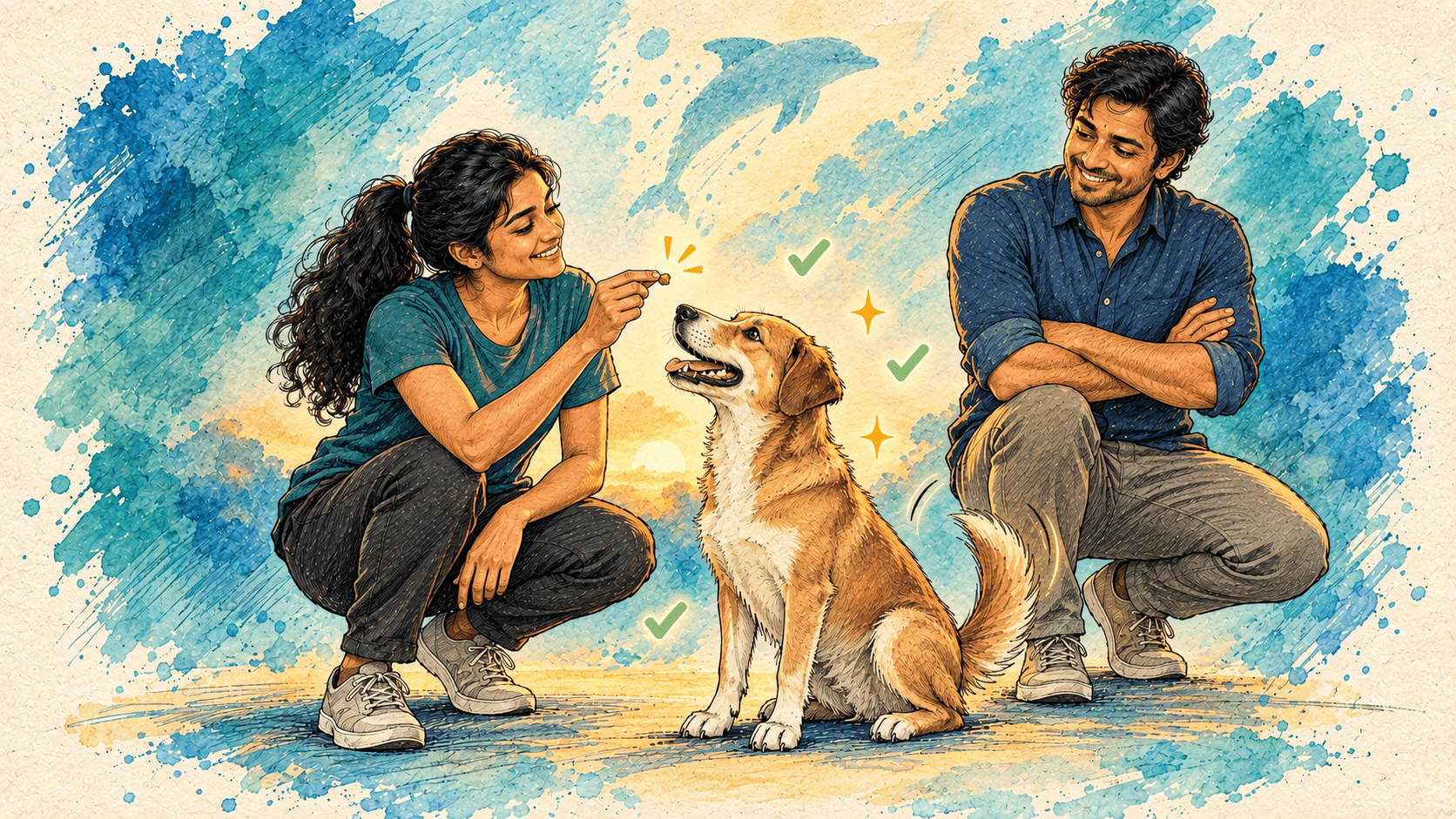
And save the big, happy surprise for the learner who is truly stuck—never use any of these tricks just to quietly steal someone’s time.
And save the big, happy surprise for the learner who is truly stuck—never use any of these tricks just to quietly steal someone’s time.
And save the big, happy surprise for the learner who is truly stuck—never use any of these tricks just to quietly steal someone’s time.
Most of these ideas came from a quietly brilliant book—“Don’t Shoot the Dog” by Karen Pryor. It looks like a book about training animals. It’s really about every moment where one person is trying to help another person learn.
Most of these ideas came from a quietly brilliant book—“Don’t Shoot the Dog” by Karen Pryor. It looks like a book about training animals. It’s really about every moment where one person is trying to help another person learn.
Most of these ideas came from a quietly brilliant book—“Don’t Shoot the Dog” by Karen Pryor. It looks like a book about training animals. It’s really about every moment where one person is trying to help another person learn.
Our job was never to make the learner feel small. It’s to design the one small moment that makes the next try feel worth it.
Our job was never to make the learner feel small. It’s to design the one small moment that makes the next try feel worth it.
Our job was never to make the learner feel small. It’s to design the one small moment that makes the next try feel worth it.
Want to work together?
Feel free to reach out for collaborations, inquiries, or just to say hello.
Want to work together?
Feel free to reach out for collaborations, inquiries, or just to say hello.
Want to work together?
Feel free to reach out for collaborations, inquiries, or just to say hello.
Let's Be Friends
Feel Free to Hit Me Up!
I always enjoyed product discussions and If you’re a startup founder or PM/Growth person and interested to chat! Hit me up on any social media platforms.





Crafted with ❤️ on Framer, All Rights Reserved © 2026 Guruprakash.
Let's Be Friends
Feel Free to Hit Me Up!
I always enjoyed product discussions and If you’re a startup founder or PM/Growth person and interested to chat! Hit me up on any social media platforms.
Crafted with ❤️ on Framer, All Rights Reserved © 2025 Guruprakash.
Let's Be Friends
Feel Free to Hit Me Up!
I always enjoyed product discussions and If you’re a startup founder or PM/Growth person and interested to chat! Hit me up on any social media platforms.
Crafted with ❤️ on Framer
All Rights Reserved © 2025 Guruprakash.